Share This Article
OnlyFans refunds are rare, and no subscriber should build a spending plan that depends on getting money back. The platform treats most purchases as final, so the practical approach is to budget for content access the way you budget for any entertainment expense. Set a cap, accept that some spending will not deliver what you hoped, and keep the amounts small enough that a loss never disrupts your finances. This guide explains where refunds actually exist, how card disputes work, and how to structure a monthly plan that absorbs losses without drama. BestOnlyFans ranking methodology is used here only to frame how creator activity and page history can inform pre-purchase checks.

Platform Refund Realities
OnlyFans grants refunds in a narrow set of circumstances, and buyer’s remorse is not one of them. The platform’s support process is built around verifying that something technically failed, not around evaluating whether you enjoyed what you bought. If a page loaded, a message unlocked, and the content matched its description, the transaction is generally closed. The rankings the BestOnlyFans team publishes are refreshed monthly and never factor into refund eligibility.
Approved scenarios cluster around four situations. A fraudulent charge that you did not initiate qualifies, and so does a billing error that duplicated a charge.
| Request Type | Typical Response | Subscriber Alternative |
|---|---|---|
| Content quality disappointment | Denied | Use creator feedback systems and stop renewing |
| Access technical failure | Approved with documentation | Platform credit is the typical resolution |
| Accidental purchase | Denied | Enable purchase confirmations in settings |
| Auto-renew regret | Denied | Cancel earlier in the next billing cycle |
The four scenarios that do qualify, in practice, look like this:
- Complete platform technical failure that prevented any access to purchased content
- Creator page deletion while an active subscription was still running
- A fraudulent charge that the account holder did not initiate
- A billing error that duplicated the same charge twice
Note the pattern: every approved case involves either a system fault or a page-level event outside your control. None involve a change of mind. That distinction should shape how you spend, because a plan that assumes recovery from ordinary disappointment is a plan built on an event that mostly does not happen.
Treat every subscription and pay-per-view unlock as final at the moment of purchase. If a charge would hurt your budget when it never comes back, the charge is too large for your current plan.
Card Issuer Dispute Pathways
This route exists, but it carries its own costs and risks, and it is not a substitute for careful spending. A chargeback is a formal dispute, not a customer service request, and the platform can respond to it.
| Dispute Route | Timeline | Outcome Risk |
|---|---|---|
| Platform support ticket first | Immediate | Low success rate, but preserves the account |
| Card issuer dispute within 60 days | Moderate, several weeks | Temporary credit, possible account termination |
| Small claims legal action | Lengthy, months | High cost, uncertain precedent for digital goods |
Most card networks set a 60-day window for filing a dispute, counted from the statement date. Once that period passes, the issuer generally cannot help, regardless of how strong the underlying claim is.
Chargebacks also carry a real consequence. Filing one against the platform can lead to account termination, which means losing access to every subscription and message history attached to that account. For a single disputed charge of a few dollars, that trade is usually poor.
If you have already lost access and need to sign back in to review purchase records, resolving that first makes the dispute path simpler. Subscribers who want the cleanest route back into their account often look for the best onlyfans login guidance, since access problems and billing problems frequently arrive together.

Budget Structures That Absorb Losses
The core idea is simple: build a spending plan whose ceiling already accounts for money that will not come back. A subscriber who spends $40 a month and expects to recover $10 of it through refunds is planning around an unreliable assumption. A subscriber who caps the month at $40 and treats all of it as spent has a plan that works regardless.
Five structural elements make this practical:
- Set an entertainment category cap that includes every subscription, PPV unlock, tip, and potential loss
- Reconcile monthly and accept that the final number will vary from the plan
- Run a quarterly true-up to catch systematic overspending before it becomes a habit
- Review annually and adjust the structure rather than patching individual months
- Track disputed charges separately from accepted ones so the two never blur together

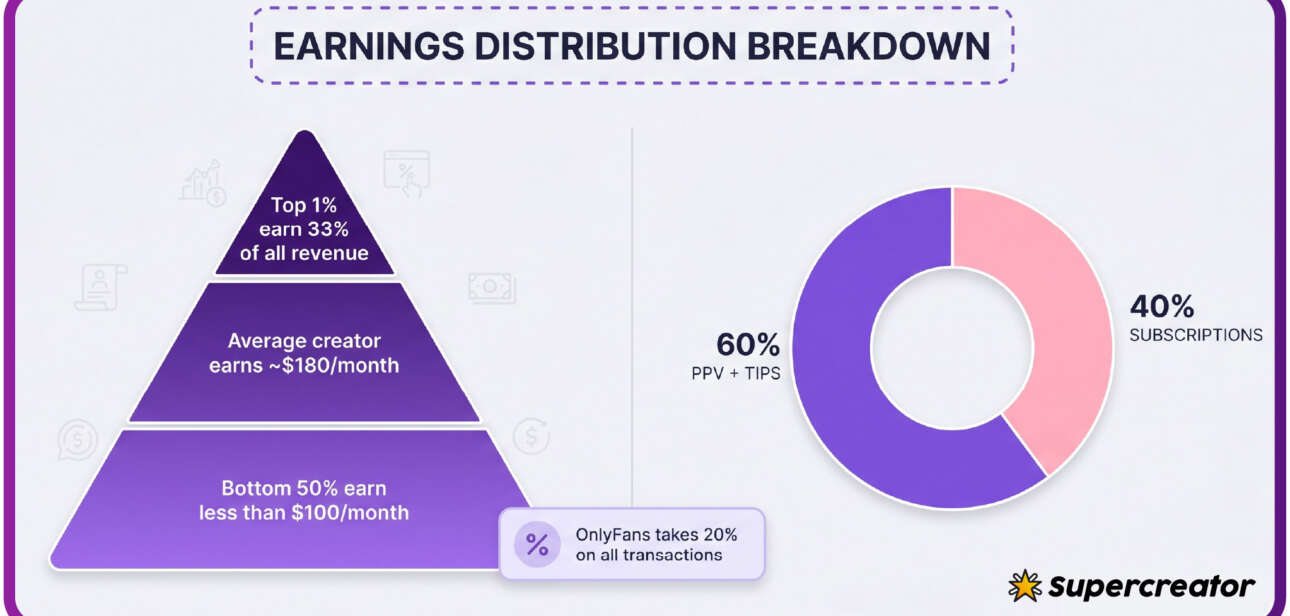
The platform fee is 20% on everything, and the creator keeps 80%. The paid subscription range runs from $4.99 at the minimum to $49.99 at the maximum, with most paid pages clustering between $5 and $10. Free pages set price to $0 and earn via pay-per-view (PPV) messages and tips.
A $3 promotional first month is common, but base prices cannot sit below $4.99. PPV messages unlock up to $50, paid chat commonly runs $3 to $5 per message, and tips can reach $100. A single evening of casual unlocking can exceed a month of subscriptions if you are not tracking it.

Pre-Purchase Risk Reduction
The cheapest refund is the one you never need, and most of the work happens before you pay. Verification is not about suspicion; it is about confirming that a page matches what you expect before money moves. Five steps cover most of the ground.
- Check creator posting consistency through BestOnlyFans activity metrics and ranking history
- Review public social media for samples of the content style you are considering
- Verify how long the page has existed rather than relying on recent promotion
- Start with a minimal PPV commitment before any larger purchase
- Use the platform wallet where possible so purchases stay in one trackable record
OnlyFans has no built-in discovery feed or directory, which is exactly why ranking sites exist in the first place. That gap means new subscribers often arrive at a page with almost no independent context, and context is what prevents mismatched purchases.
A card verification hold of $0.10 is a normal authorization check, not a charge, and it is refunded within days.
Documentation for Dispute Preparedness
If a legitimate problem does occur, the outcome often depends on what you can show. Support teams work from records, and a subscriber with a clear paper trail moves through the process faster than one relying on memory. Four record types are worth preserving.
- Screenshots of the purchase description and any promised content
- Timestamps of failed access attempts, including the error shown
- Support ticket numbers and the full text of each response
- A chronological log of purchase attempts and their outcomes
A card issuer dispute generally needs to be filed within 60 days, and reconstructing evidence after the window closes is not possible. Documentation costs a few minutes at the time of purchase and saves considerable effort later.
Recognizing common payment fraud patterns also helps you tell the difference between a platform error and something that needs escalation to your bank. Unauthorized charges are among the small set of cases where a dispute is clearly the right instrument.
When Disputes Are Appropriate
Repeated disputes can damage your standing with both the platform and your card issuer, which leaves you with fewer options when a real problem appears. Four grounds are legitimate.
- Complete non-delivery of purchased digital goods
- Significant misrepresentation of content type in the purchase description
- Unauthorized use of your payment method by someone else
- Double-charging for a single transaction
If a creator’s style does not match your expectations, cancelling is faster and cheaper than disputing. If a subscription renewed unexpectedly, cancelling earlier in the next cycle solves the problem going forward.
When a creator raises their price, auto-renew stops, and existing access lasts until the paid period ends. That protects subscribers from silent increases, but it also means a lapse in access is a normal billing event, not a refund case.
Long-Term Financial Planning
Zoom out and content access is an entertainment expense with inherent variance, not a stable utility bill. Some months you spend $10, some months $60, and some of that spending will not deliver what you wanted. A plan that treats this variance as normal is more durable than one that treats every disappointing purchase as an anomaly to be corrected.
An annual view helps. Set a yearly ceiling, divide it into monthly targets, and review the actual figure each quarter. A standard household budgeting framework is a reasonable starting model, and the categories adapt easily once you decide how much of your entertainment budget belongs here.

Platform context supports the long view. OnlyFans grew steadily from its 2016 launch, with a notable surge in 2020, and the paid subscription model has remained consistent since. That consistency means the budgeting problem is not going away; it is a recurring line item that deserves a recurring plan.

The final principle ties everything together. Assume no refund will arrive, keep individual purchases small enough that a loss is absorbable, and document anything that looks like a genuine fault. That combination removes the anxiety from spending and removes the temptation to reach for disputes that were never going to succeed.
FAQ
What percentage of OnlyFans refund requests are typically approved?
The platform does not publish approval rates, and any specific figure circulating online should be treated with caution. What is clear from policy language is that approvals are concentrated in technical failures and page-level events, so the practical approval rate for ordinary quality complaints is very low.
Can I dispute an OnlyFans charge with my bank if the platform denies my refund?
Yes, in principle. Card issuers accept disputes within roughly 60 days of the charge, and they will review the claim independently. Success depends on the strength of your documentation and the specific reason, and filing can lead to account termination if the platform contests it.
Will disputing an OnlyFans charge get my account banned?
It can. A chargeback is treated as a formal conflict, and the platform may close the account in response. That removes access to all subscriptions and message history, so the trade is rarely worthwhile for small charges.
How long do I have to request a refund after an OnlyFans purchase?
Platform support requests should be filed as soon as the problem appears, because access issues and billing errors are time-sensitive. If the platform route fails and you intend to dispute the charge, you generally have about 60 days from the statement date to file with your card issuer.